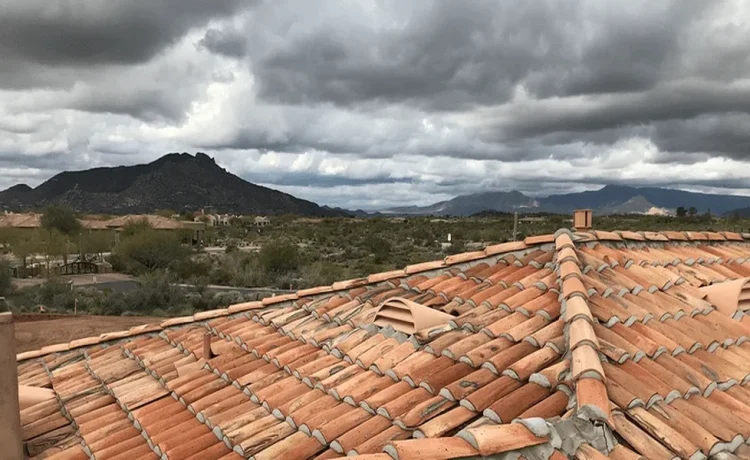
A shingle roof in Phoenix’s East Valley can hit 190 degrees on the surface during a July afternoon. Not the air, the shingles themselves. That number surprises almost every homeowner I talk to, and it explains why the roof you grew up with in Ohio behaves nothing like the one sitting over your head in Florence.
Arizona doesn’t just age roofs faster. It attacks them in two directions, most of the year with heat and ultraviolet radiation, and for a violent stretch each summer with wind-driven rain. Knowing how those two forces work changes what you should buy, who you should hire, and how often you should climb a ladder to look things over.
Here’s the honest version of it.
What the sun actually does to asphalt shingles
Asphalt shingles are built from a fiberglass mat, coated in asphalt, then topped with mineral granules. Those granules are the armor. They block ultraviolet light from reaching the asphalt underneath, and the asphalt stays flexible because of the oils bound inside it.
Heat and UV break that system down. The oils oxidize and escape, the asphalt dries and shrinks, and the granules start letting go. You’ll see them collecting in gutters and at the base of downspouts. Once enough granules wash away, the exposed asphalt turns dull and gray, then hairline cracks spread, then the whole shingle curls at the edges.
In a mild climate, that process might take twenty-five years. In the Phoenix metro, expect it to move faster. The Asphalt Roofing Manufacturers Association describes granule loss as the leading indicator of shingle aging, and in desert conditions it shows up years before you’d see it in a wetter state.
The upside? Manufacturers know this. Products rated for high solar exposure and carrying a Class 4 impact rating from a testing lab will hold up noticeably longer than builder-grade shingles. That rating comes from UL Solutions, and it’s the one number worth asking about when you’re comparing bids.
Monsoon season is the second attacker
Everyone focuses on the heat. The monsoon does a different kind of damage in a much shorter window.
July and August bring walls of rain driven sideways at 40 to 60 miles an hour, sometimes after months of zero precipitation. Shingles that have spent spring baking and drying out are stiff and slightly shrunken. Then a storm hits and forces water under lifted tabs, into nail heads, and behind flashing that was never sealed for horizontal rain.
The leak doesn’t appear during the storm. It shows up two or three weeks later as a brown ring on your ceiling, which makes tracing the actual entry point a nightmare. I’ve watched homeowners reroof a whole slope trying to chase a stain that came in through a cracked pipe boot twenty feet away.
Two details matter more than anything else for monsoon performance. First, the underlayment.
A synthetic underlayment is the real waterproofing layer, and it’s what saves you when a shingle fails. Second, the fastening pattern and nailing depth. A nail driven too deep cuts through the shingle and voids the warranty. A nail driven high or crooked leaves a tab loose and a path for water. You can’t inspect fastening quality from the ground. That’s one reason a properly licensed shingle roofing contractor in Florence AZ is worth paying for over the cheapest bid on the block.
The roof you should actually buy in central Arizona
If I were redoing my own roof in Pinal County tomorrow, here’s what I’d specify, and here’s what I’d skip.
- Class 4 impact-rated shingles. Non-negotiable. They cost more up front and survive monsoon debris, which is cheaper than a repair claim.
- Synthetic underlayment, not felt. Felt paper dries, cracks, and tears in desert heat before the shingles even go on.
- Reflective or “cool roof” rated shingles. Lighter colored or specially coated products bounce solar heat instead of absorbing it. ENERGY STAR maintains a list of products that meet its solar reflectance standards, and a cooler roof surface means less heat pushed into your attic.
- Ice and water shield at valleys, penetrations, and eaves. This is the belt-and-suspenders layer where wind-driven rain gets in first.
- Upgraded ridge ventilation. Hot attics cook shingles from underneath. Ventilation is not a luxury in this climate.
What I’d skip: three-tab builder shingles on a west-facing slope. That surface takes the worst of the afternoon sun, and cheap shingles there age out two or three times faster than the rest of the roof. If your budget is tight, put better shingles on the hot side and save money on the north slope.
A short maintenance checklist for desert homeowners
You don’t need to be a roofer to spot early trouble. Walk your property twice a year, once in late spring before monsoon and once in late fall.
- Look at the ground under your downspouts. Heavy granule accumulation means the shingles are shedding their armor.
- Scan for curled, cracked, or missing tabs, especially on south and west slopes.
- Check the flashing around chimneys, vents, and skylights for lifted edges or cracked sealant.
- Clear debris from valleys and behind any dormers. Mesquite and palo verde litter dams water and rots the deck.
- Look at your attic after the first big storm. Water stains on the underside of roof sheathing tell you exactly where the problem is.
If you find soft spots in the decking when you press on it, or daylight coming through the roof boards, that’s beyond a patch. A one-section shingle repair can be done cleanly, but once you’re replacing multiple slopes, the cost of piecemeal work usually exceeds a full replacement.
How long should you expect it to last?
A manufacturer’s warranty is not a lifespan promise. A fifty-year shingle in Ohio and a fifty-year shingle in Marana are living two different lives. In the desert, most asphalt roofs land somewhere in the fifteen-to-twenty-five-year range depending on shingle quality, attic ventilation, color, and slope orientation.
West and south slopes fail first. If your roof is approaching year fifteen and you’re seeing granule loss plus curling on those faces, start budgeting now rather than waiting for a monsoon leak to force the decision on a weekend.
The other thing worth knowing: insurance. A roof at the end of its service life often gets depreciated heavily in a storm damage claim, meaning you collect far less than you expect. Replacing on your own timeline usually costs less than replacing after a storm with an adjuster standing in your driveway.
What to ask before you sign anything
Three questions separate a real roofer from a salesman with a truck.
Ask what underlayment they’re using by brand and product name. If they can’t answer, they haven’t thought about monsoon water. Ask whether they pull a permit, because a reroof in most Arizona jurisdictions requires one, and skipping it creates a problem when you sell. Ask what happens if the decking underneath is rotted, and get the per-sheet price in writing before work starts, not after.
Good contractors will answer all three without flinching. They’ll also walk the roof with you and photograph what they find. Bad ones will talk about how long they’ve been in business.
Arizona is genuinely hard on shingles, but it’s predictable. You know the sun will hit the west
slope hardest. You know the rain will arrive sideways in August. Build for those two facts, verify the details that hide under the shingles, and you’ll get a roof that earns its keep instead of one that quietly fails after year twelve.
Take thirty minutes this weekend. Walk your property line, look at what’s collecting in your gutters, and check the ceiling corners in your back bedrooms. That small habit is the cheapest roof maintenance you’ll ever do.