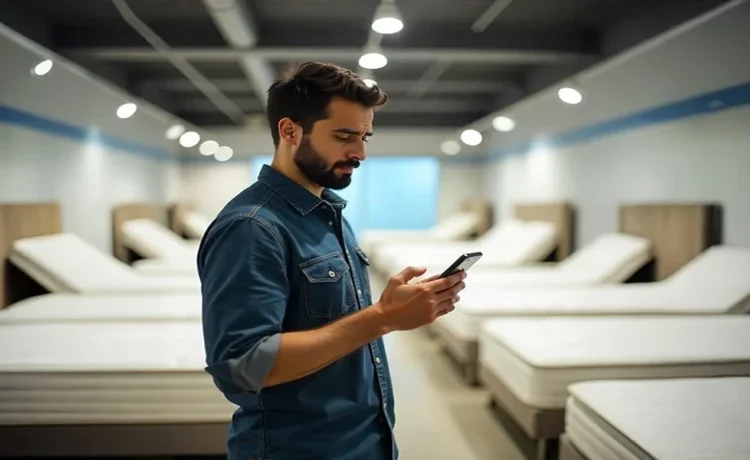
Ninety minutes. That’s how long the average shopper will lie on a bed in a showroom before they either commit or walk, and most of them walk. Not because the bed failed them, but because nobody gave them a reason to come back.
I’ve watched this play out on retail floors for years, and the pattern never changes. A couple walks in on a Saturday, spends an hour testing five beds, takes a business card, and vanishes. The store blames price. The store is wrong. What actually happened is that the salesperson treated a mattress purchase like a furniture purchase, when it’s closer to buying a car: emotional, slow, and heavily dependent on trust built over multiple visits.
Here’s what the stores that actually close do differently. If you sell premium beds, whether that’s Hastens mattresses in Santa Fe, NM, or a mid-tier line in a suburban strip mall, the mechanics are the same. You slow the customer down instead of pushing them forward, and you build a reason for visit number two before they ever reach the parking lot.
Why the first visit almost never closes
A mattress is one of the few purchases where the buyer has to use their body to evaluate the product. You can compare two phones on a spec sheet. You can’t compare two beds that way. The decision runs through the shoulders, the lower back, and whatever joint has been complaining for the past six months.
That’s a problem for a one-visit sales cycle, because bodies need time. A shopper who lies on a firm horsehair bed for ten minutes feels pressure they’d never notice after a full night. So they flinch, they assume the bed is wrong for them, and they leave to “think about it.”
Smart showrooms handle this by turning the first visit into reconnaissance rather than a pitch. They ask what the customer currently sleeps on, how old it is, whether they wake up stiff. They write it down. That notebook becomes the reason for a phone call three days later that isn’t a cold follow-up.
Give your floor staff a script they’ll actually use
Most sales training fails because it hands people a paragraph to memorize. Nobody talks like that under pressure. What works is a short sequence of questions that keeps the conversation moving without sounding like an interrogation.
- What are you sleeping on right now, and how long have you had it?
- Do you wake up with any stiffness or soreness?
- Who else shares the bed, and do you both like the same firmness?
- What made you start looking this month instead of last year?
That last one matters more than the rest. It reveals the trigger event, which is usually a bad night, a move, or a body that finally complained loud enough. Once you know the trigger, every follow-up message you send has a hook.
I’d take four good questions over twenty minutes of product features every single time. Features live on the tag. The conversation is the only thing the customer can’t get from a website.
Make the second visit feel like an appointment, not a return
Here’s the tactical move most stores miss. When someone leaves without buying, don’t say “come back anytime.” That’s permission to forget you. Book a specific window, put it in writing, and tell them exactly what will happen when they arrive.
Something like: “Thursday at 4, I’ll have the two beds you liked set up side by side, and I’ll pull the specs on your current mattress so we can compare support directly.” That’s concrete. It gives the shopper a task and gives your staff a deadline.
The follow-up economy matters here. According to the U.S. Small Business Administration, repeat customers drive a disproportionate share of revenue for small independent retailers, which makes the second visit the real unit of success in this business, not the first sale.
The materials story is your best salesperson
Premium beds sell on what’s inside them, and most salespeople explain that badly. They recite a materials list. Horsehair, cotton, wool, flax, steel springs. It lands like a nutrition label.
Flip it. Horsehair ventilates, which is why a bed built with it doesn’t sleep hot in summer. Wool regulates moisture. Cotton and flax create a firm, breathable base. A steel spring system, hand-tied rather than glued, moves with one sleeper instead of broadcasting every shift to the other. Now the list means something.
I’ve found that shoppers who hear the materials explained as a set of physical benefits retain it and repeat it to their spouse. That repetition is free word of mouth, and it happens before the purchase, which is rare. Most referrals come after a sale.
A practical playbook for the next thirty days
If you run a showroom and want measurable movement, don’t overhaul everything. Pick these and run them.
- Log every visitor. What they tested, what they disliked, what they currently own, and the trigger event.
- Set a follow-up clock. First contact within seventy-two hours, second within ten days. Any longer and the memory of the bed fades.
- Stage the second visit. Pull the two finalists to one area before the customer arrives, with bedding already on.
- Train the materials talk. Every staff member should be able to explain horsehair, wool, and cotton in one plain sentence each.
- Track by source. Know which channel produced the appointment, because the mix shifts seasonally.
One thing I’d skip entirely: discounting to close the hesitant buyer. In the premium segment it signals that the price was never real, and it poisons every future negotiation with that customer and everyone they tell.
Know who’s actually buying right now
Demographics in this category have moved, and stores that still assume their buyer is a retired couple downsizing are leaving money on the floor. Younger households are entering the premium segment, researching online for weeks, then showing up to test in person. They arrive knowing more than the salesperson sometimes does.
That shift shows up in the broader retail picture. Data from the U.S. Census Bureau tracks household spending patterns that make it clear how much discretionary income now flows through home and furniture categories, and how much of that spending has migrated toward higher-ticket, fewer-purchase items. The customer walking in has done homework. Your job is to out-know them, not out-talk them.
When the whole thing hinges on trust
Nobody spends serious money on a bed from someone they don’t believe. That belief gets built through small signals. Remembering the customer’s name on visit two. Calling when you said you would. Admitting that a specific bed isn’t right for their back instead of pushing the highest margin model.
I’ve seen a showroom lose a sale by recommending the better fit and gain three referrals from it. That trade is worth it every time, and it’s the one thing an online competitor can’t replicate.
If you’re running a floor and want one number to watch, watch second-visit rate. Not close rate, not units moved, not average ticket. When second visits go up, everything downstream follows, because you’ve finally given people a reason to come back instead of a reason to keep shopping.