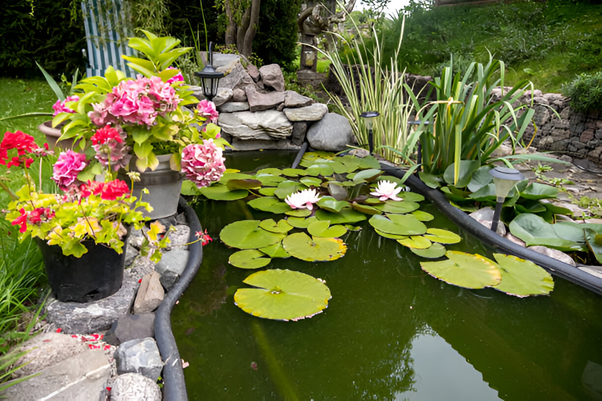
To make a pond in your garden is rewarding, and you should begin by getting the right pond liner. Laying the layer on the bottom and sides means the water won’t escape or contaminate your tank.
Because there are many types of pond liners, it may be tricky to find the right one. However, you don’t need to worry—follow this guide to see the good and bad sides of every type and choose the style that is most useful for you.
The way to choose a liner differs from one garden to the next. Their life expectancy, how much they cost, their impact on nature and how easy it is to install them are things to consider as well. For advice and the right products, visit That Pond Guy if you decide to build a water feature and want a suitable pond liner.
Understanding the Different Types of Pond Liners
To help you choose better, we have described both the positive and negative features of the best pond liners.
Bentonite Liners
Pros:
- Easy to install and repair
- Natural, environmentally friendly, and non-toxic
- Good for small, shallow ponds.
Cons:
- Prone to punctures and not very durable
- Difficult to shape in larger or irregularly shaped ponds
- Does not offer a long lifespan.
PVC Liners
Pros:
- Very flexible and simple to handle
- Resistant to UV rays and various chemicals
- Works well for ponds of different sizes.
Cons:
- Can tear or puncture easily
- Needs cautious installation to avoid damage
- Not as durable in the long term.
EPDM Liners
Pros:
- Excellent puncture resistance and flexibility
- Adapts easily to pond shapes and contours
- Long-lasting and versatile for different pond sizes.
Cons:
- Higher initial cost compared to PVC
- Can degrade under long-term UV exposure
- Seams must be carefully sealed for best performance.
HDPE Liners
Pros:
- Ideal for large ponds due to their strength
- Extremely resilient to UV radiation and chemicals
- Long lifespan and low maintenance.
Cons:
- Less flexible, especially for complex pond shapes
- Installation often requires professional help
- More expensive than basic options.
RPE Liners
Pros:
- Very strong against tears and punctures
- UV-resistant and made for long-term use
- More adaptable and straightforward to install than HDPE.
Cons:
- Typically, more costly
- May not be available in all areas
- Complex shapes may still need expert installation.
Things to Think About Before Choosing
Be sure to decide on how much you want to customise your pond, who will be handling the project and the money you are willing to spend before picking a liner. Choosing flexibility helps achieve creative water features, while durable materials are better when the features are set up for longer.
Final Thoughts
The decision on which pond liner to use should not be influenced only by ease or cost. You should focus on finding products that remain strong, promote a healthy pond and fit what you imagine for your water garden. With a bit of planning and advice from seasoned professionals like That Pond Guy, you are well on your way to building a pond that thrives for years to come.